Showing posts with label Thomasville. Show all posts

Thursday, December 26, 2013

Dry Ice #8: Dry Ice Fire Extinguisher

This is the eighth segment in a series on dry ice experiments. CLICK HERE FOR SAFETY INFORMATION.

I set up this experiment a bit more than the others. The previous week we did an experiment that showed that gas was a fluid and could be poured.

I placed a small chunk of dry ice in a glass (really a tub that used to have cocoa in it) of warm water where it began sublimating rapidly. I lit a candle (I used one that was in a jar), and then poured the mist—and heavy carbon dioxide gas—into the candle, being careful to not pour the water. The candle went out.

Why this works: carbon dioxide, a fluid, is heavier than air, so it displaces the room air (and oxygen) away from the candle. Fire needs oxygen to burn, so the without oxygen, the candle burns out.

The tricky part is pouring the gas and not the water. When I repeated the experiment for the kids, I ended up pouring water all over the candle. That put it out, too. 


Dry Ice #7: Colored Mist

This is the seventh segment in a series on dry ice experiments. CLICK HERE FOR SAFETY INFORMATION.

In our last segment, we made LOTS of mist with dry ice and warm water. Wouldn't it be fun if it was clouds of COLORED mist? 


We placed a chunk of dry ice in one of the large glasses and dropped food coloring into the glass. We used our observation skills to see that the food coloring froze. Then we added warm water. The water melted the food coloring, so it dissolved into the solution. 


But as we watched, we saw that the mist was not colored.

Why?


The mist is formed because the sublimating gas is colder than the surrounding air. This causes the water droplets to condense from the air. The dye is not 'traveling' from the glass into the mist. The water is coming from the air itself. 


But it's still really cool to see bubbling green, blue, or red liquids spewing mist. 

By the way, the only ways to get colored mist is to either shine colored lights on the mist or use smoke or powder. Smoke differs from mist in that it has solid particles. 


Saturday, December 21, 2013

Dry Ice: #6 Warm vs. Cold Water

This is the sixth segment in a series on dry ice experiments. CLICK HERE FOR SAFETY INFORMATION.

This experiment used two large beakers (we used extra large glasses) and a good supply of cold and warm water.

We filled a glass with cold water and placed a chuck of dry ice in it. Immediately, large bubbles rose to the surface. The water looked like it was boiling. The glass began to mist, to 'smoke' and 'fog.'

Very cool.

The water helped the children visualize the sublimation of the carbon dioxide (the boiling effect). The gas left the glass and being cooler than the air around it, caused water in the air to condense and form clouds of vapor.

The children passed the glass around and giggled and waved their hands through the clouds.

Then I pulled out the warm water.

This time when I dropped the piece of dry ice in, it splooshed and splattered and splashed all over the table. Huge clouds of vapor billowed over the table. It was amazing.

This gave us the opportunity to discuss independent and dependent variables.

Independent variable: Temperature

Dependent variable: Splooshiness

If I had had older students, I would have had them discuss and debate the role of heat. Is it a catalyst?

In the video below, you can easily see the effects of putting dry ice into cold and warm water. In our experiments, the differences were even more dramatic.


Friday, December 20, 2013

Dry Ice: #5 Screaming Quarters

This is the fifth segment in a series on dry ice experiments. CLICK HERE FOR SAFETY INFORMATION.

For this experiment, we warmed up coins (quarters are best because they are the largest of the easy-to-find coins). The children rubbed their hands back and forth over the coins while I discussed friction. When the coin was good and warm, they child (wearing thick gloves) pressed the coin onto the brick of dry ice.


SQEEEEE.


So what happened?

The dry ice under the coin rapidly sublimated which lifted the coin. The gas was released, and the coin fell back. This happened over and over producing a vibration and a sound.

This happened not only when we pressed the coins onto the dry ice but also when we used tongs to pick up small pieces. Each time we discussed why it happened--repetition is important.

This is a YouTube clip I found that shows what happens during this experiment.


History Fair Meeting Schedule


History Fair season is fast approaching. Here is a schedule of upcoming meetings in preparation for National History Day (homeschool edition!). 


PARENT ORIENTATION

Learn about National History Day, this year's themes, how to help your student research and complete a project

DATE: January 7

TIME: 10:00am

COST: Free 

LOCATION: 
Thomas County Historical Society
725 Dawson Street
Thomasville, Georgia, 31792


MAKE-UP PARENT ORIENTATION MEETING

A rehash of information for those parent who are unable to attend the first meeting

DATE: January 21

TIME: 7:00pm

COST: Free

LOCATION:
Thomas County Public Library
201 N. Madison Street
Thomasville, Georgia, 31792


STUDENT ORIENTATION MEETING

The students' opportunity to learn about National History Day and how to choose and develop a project in line with this year's theme

DATE: February 7

TIME: 10:00am

COST: Free

LOCATION: 
Thomas County Historical Society
725 Dawson Street
Thomasville, Georgia, 31792


STUDENT RESEARCH INTENSIVE

Students will learn what resources are available to them as they begin to research their topics. Students will also learn basic researching techniques. 

DATE: February 27

TIME: 10:00am

COST: Thomas County Residents- Free, Others- TBD

LOCATION:
Thomas County Historical Society
725 Dawson Street
Thomasville, Georgia, 31792


REGISTRATION DUE DATE

DATE: March 1, 2014

COST: $8


RESEARCH ASSISTANCE

Students will receive advice and support in their research efforts

DATE: March 13

TIME: 10:00am

COST: Free

LOCATION: 
Thomas County Historical Society
725 Dawson Street
Thomasville, Georgia, 31792


HISTORY FAIR

DATE: May 8

LOCATION: TBD


Winter Solstice Celebration at Birdsong

GalangalCredit: Birdsong Website

A WINTER SOLSTICE CELEBRATION
Saturday, December 21
5:00PM - 10:00 PM
Cost: $8 adults, $5 children

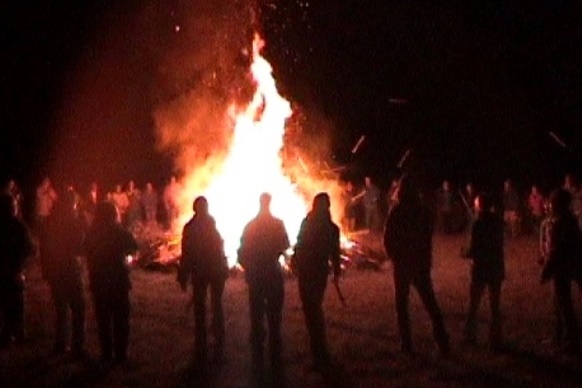
Join us to light the bonfire in honor of the Winter Solstice and celebrate the memory of our co-founders Betty and Ed Komarek.


Our schedule for the evening:

4pm to 5pm - Arrive early, bring your own hot or cold drinks, a picnic supper, lawn chairs or blanket, and settle in to enjoy the evening. (Please see note below.)

5pm - Listen to the music and angelic voice of Velma Frye.

5:45pm - Welcome and lighting of the bonfire, accompanied by Bradley White and friends on their didgeridoos.

Once the bonfire is going strong, we will “throw the bamboo”. Each person will be given a bamboo stick to throw in the fire where it will explode and create good intentions for the coming year.

Around 6:30pm - We will walk out to the Star Pasture for a guided observation of the night sky on the actual day of the Winter Solstice. Dress for the weather, bring a blanket to lie on to observe the stars, and bring your binoculars or scope for viewing and a flashlight.

Rest of the evening: Contemplate the Universe with your family and friends, warm up around the bonfire, and enjoy more didgeridoo music.

It is our hope that this evening will give you a moment to connect with nature, to be with your friends, to consider what really matters to you at this time of year, and experience some peace and quiet under the night sky before heading back to a busy holiday season.

Please R.S.V.P. and leave your email address or phone number, so that in case of rain we can contact you. This is an all-outdoor event. At this time of year there is always a chance of rain, so please pay attention to the weather and call before you come if you have questions. If it rains several days in advance it can soak the ground and the bonfire, which won’t have time to dry out.

Dress for the weather and remember to bring: drinks, a picnic supper (no food will be available), blanket, lawn chairs, flashlight, and binoculars.

Contact us at: birdsong@birdsongnaturecenter.org, 1-800-953-BIRD(2473), or 1-229-377-4408.

* Please note: Traditionally we have prepared a meal and hot drinks for the Winter Solstice event, which were included in the cost. To simplify this event and make it easier on our volunteers at this busy time of year, we will forego including a meal and drinks, and invite you to bring your own refreshments and a picnic supper. The rest of the event will remain the same as past years, and the price cut in half - now $8 adults, $5 children. 

Tuesday, December 17, 2013

Thomasville Entertainment Foundation


It's not every town that can bring outstanding, big-name performances to a small, 500-seat auditorium. This is the goal of the Thomasville Entertainment Foundation. TEF cooperates with the Thomasville Center of the Arts to bring high class culture to Thomasville.


Look at this season's schedule:

Jon Nakamatsu (pianist)-- Thursday, January 30, 8 PM

Guitar Passions, Sharon Isbin, Stanley Jordan, Romero Luambo-- Saturday, February 15, 8 PM

New York Chamber Soloists-- Thursday, March 20, 8 PM

Diane Schuur (vocalist, pianist)-- Thursday, April 3, 8 PM

WEBSITE FOR MORE INFORMATION AND TICKETS


Monday, December 16, 2013

Dry Ice: #4 Balloons!

The balloon at the beginning of the day
This is the fourth segment in a series on dry ice experiments. CLICK HERE FOR SAFETY INFORMATION.

For our next experiment, I broke apart the large 5 lb block of dry ice with a metal putty knife and a hammer while a kid stretched out a balloon.

An adult then held open the mouth of the balloon while I, using the tongs, dropped in small pieces of dry ice. The balloon was then carefully tied off.


The balloon a few minutes later
Over time, the dry ice sublimated and filled the balloon with gaseous carbon dioxide. As this happened, the balloon expanded. It didn't float (carbon dioxide is more dense than air, remember), but it was neat to set it in the middle of the table and watch it grow as we performed other demonstrations and experiments.

We tried to make the balloon pop, but we were unable to get enough dry ice into the balloon before it
became difficult to tie. My son had the greatest success with this by crushing the dry ice and pouring it in. Even so, the balloon merely expanded to a large size; it didn't pop.

If you really want to make it pop, you will probably need to place the balloon (with dry ice) in a bowl of warm water, as seen in the video below:


Dry Ice #3: Floating Bubbles

This is the third segment in a series on dry ice experiments. CLICK HERE FOR SAFETY INFORMATION.


As you drive your (vented) cooler of dry ice home from Publix, the blocks are sublimating. A layer of carbon dioxide is building up.

When you get home, you can show the kids the layer's existence by floating bubbles on it.


Materials

Dry Ice
Cooler
Bubble Solution
Bubble Wand

Open the cooler and blow the bubbles in. They will float on the layer of carbon dioxide.

You may notice that the bubble appears to dry out and wrinkle. It is actually freezing. If you crush the bubble, it will powder and melt in your hand.


As the bubble rests on the layer, you will note that it sinks a little. It is getting colder, denser, and therefore lower in the layer. Eventually, it may even rest on the bottom.

When I went back at the end of the day to remove the final block of dry ice, there were still some bubbles rolling around in the bottom of the cooler.


Below is a video I found on YouTube that shows the experiment in action.


Dry Ice: #2 Materials

This is the second segment in a series on dry ice experiments. CLICK HERE FOR SAFETY INFO.

Need dry ice? Here's the hook up:

The best place to look is your local grocery store. Hopefully, your local grocery store is a Publix because Publix is awesome. They always go above and beyond for whatever I need.

The Publix in Thomasville doesn't normally carry dry ice, but if you call ahead, sometimes they can work something out (hint: ask for Chris...he da man). The Bradfordville Publix keeps dry ice in stock at $1.49 per pound. We ordered 15 pounds (3 blocks) and had PLENTY of dry ice for 9 students, 3 teachers, and extra big outdoor fun. Everyone got as many turns as they wanted, and we didn't worry about mistakes. We followed through on every whim of experimentation. Go big or go home, right?

If I do a class again for my family or a small group with just 'normal' experiments, I will only get 5 pounds.

In addition to the dry ice, I used:

Cooler--Publix does not give you a cooler. Bring your own.
Heavy gloves
Tongs
Box fan
Metal putty knife
Hammer
Cookie sheet
Bubble solution
Bubble wand
Balloons
Quarter
Ladle
Several large glasses or beakers
Cool water
Warm water
Food coloring
Large bowl
Strip of cloth (3" x 4" longer than width of the bowl)
Dish soap
Vegetable Glycerin
Spoons
Several plastic containers (leftover cocoa containers, raisin canisters, yogurt tubs, etc.) with lids
Scissors


Outside:

Kiddie Pool or Large Bucket
Strip of cloth (4" wide x 8" longer than width of pool)

In the following segments of this series, I will go over each experiment with pictures and video.

Dry Ice #1: Safety First

This is the first segment in a series on Dry Ice Experiments.

Science is awesome. But when we 'try this at home', we must remember that safety comes first. This is especially true when it comes to dry ice (solid-state carbon dioxide).

Dry ice is formed by compressing gaseous carbon dioxide until it liquefies. This takes an amazing amount of pressure—870 psi! When the pressure is released, some of the carbon dioxide evaporates which cools the remaining carbon dioxide to a temperature of approx. -109° F (-79°C) and results in a solid.

A solid that's really stinkin' cold.

This means that if you (or your child) touches it, it will cause immediate frostbite. Though that might be educational in itself, it is probably best to avoid such an experience. It is very important to avoid touching the dry ice with your hands (do I even need to say 'don't eat it'?). Use heavy gloves, tongs, or both together to move and position the dry ice. Constantly remind yourself and your children of this. As experiments get rambunctious, it is easy to forget the safety rules.

Never place dry ice directly on the counter top, and be careful which plates and pans you use to hold it. We used metal cookie sheets, plastic bowls, and plastic and wooden tables, but I would make certain to use non-favorite ones, just in case it warps or cracks.

Solidified carbon dioxide does not return to a liquid state because of the pressure constraints of the normal atmosphere. Instead, it sublimates (skips the liquid phase) directly into a gaseous state. This gas is still pretty cold, and though it is colorless and you can't see it, it causes water vapor in the air to condense, creating the clouds and mist we are familiar with.

Carbon dioxide is a heavy gas, heavier than air. This is important to know because this means it will displace the air (and, therefore, oxygen) from the bottom of it's container (or room). In other words, you run the risk of suffocation if the room, car, wherever you are is not properly ventilated. Never have people or pets lie down in the area where you are working and move to fresh air immediately if you feel short of breath. When we were experimenting, we left the room's door to the outside open and placed a box fan in the doorway. It was also helpful to stop every so often and ask the children if they were feeling all right. Sometimes children get so excited that they don't notice they can't breathe—until it's too late.

Because the dry ice is sublimating, and the resulting gas takes up a larger volume than the solid block, any container in which it is placed must also be vented. Unventilated dry ice can make a container explode. That can be fun if it is planned for and anticipated, not so fun if it was the cooler in the trunk of your car or a glass jar. We kept the cooler vented with a wooden spoon until the blocks were needed.

Large blocks of dry ice can be broken up into pieces by using a hammer and chisel (I used a hammer and putty knife). Wear safety glasses to prevent pieces from flying into your eyes and make certain there is no one near you that could get hit by pieces.

When you are finished using dry ice, simply put it outside to sublimate or store it in a vented cooler. If you put it in your freezer, remember that it is colder than you usually keep your freezer, and it might burn the other items in it or cause the freezer to shut off completely.

DRY ICE SAFETY RULES

1. Never touch dry ice. Use heavy gloves or tongs.
2. Maintain proper ventilation.
3. Always vent the container.
4. Wear safety glasses when breaking up large blocks.

If these rules are followed, experimenting with dry ice is a fantastic learning experience!

Learning Treehouse Studies Toulouse

Learning Treehouse recently studied the artist Henri de Toulouse-Lautrec. After a short class by Holly Daughtry, including instruction and videos, they went outside and painted signs in Toulouse fashion.

Their shoes were tightly tied. After all, you can't can-can if your shoes Tou-louse.


Sunday, December 15, 2013

Activity Information for Elementary Marine Biology Camp

Camp planning is coming along well. All of the activities have been chosen and outlined. Students will arrive each day to a coloring page. They will then participate in four activities, with time set aside for snack and educational videos relating to the subjects of the day. 

Only 6 more spots available!


Elementary Marine Biology Camp

Monday: Oceanography

1. Earth's Water Comparison-- Where is all of Earth's water?
2. Shoebox Topography-- Explore and map an unknown ocean territory
3. Ocean Waves & Tides-- Watch and experience waves and tides
4. Currents-- Watch a current develop

Tuesday: Marine Botany

1. Photosynthesis-- Visualize photosynthesis
2. Algae-- Create algae press specimens
3. Kelp-- Build a kelp forest
4. Phytoplankton-- Build and race your own phytoplankton

Wednesday: Marine Zoology (Invertebrates)

1. Microscopy-- Examine algae, diatoms, and protozoans under a microscope
2. Bilateral Symmetry-- Create bilateral symmetry
3. Adaptation-- How does an octopus flee predators?
4. Invertebrates-- Make your own sea urchin and jellyfish

Thursday: Marine Zoology (Vertebrates)

1. Osteicthyse-- Build a fish
2. Whales-- Measure a whale, learn size comparison
3. Sea Turtles-- Rescue nests, determine hatchling survival
4. Ornithology-- Seabird Mobile

Friday: Ecosystems

1. Abyss-- Glowing fish sticks
2. Salt Marshes-- How do salt marshes protect the land?
3. Coral Reefs-- Build a coral polyp

Week-long project: Work with the class to build two ocean dioramas.

Ages: 6-10
Dates: May 26-30, 2014
Time: 9am-12pm
Location: Thomasville
Price: $60 per student, pre-registration, pre-pay required

Students must bring: shoebox, 2 clean 2-liter bottles

Field Trip: June 7, 2014 (day trip)
Price: TBA, not included with class
Location: Jekyll Island


Saturday, December 14, 2013

History Fair Approaches!

Are you planning for the final semester of the year? Now is the time to think about history fair! Check out the website for the schedule outline and begin brainstorming today!

CLICK HERE FOR MORE INFORMATION!

Wednesday, December 11, 2013

Thomasville Homeschool Science Fair RESULTS!

LOWER ELEMENTARY


FIRST PLACE- DANIEL SLAUGHTER


SECOND PLACE- BENJAMIN SLAUGHTER


THIRD PLACE- KELLAN DAUGHTRY


UPPER ELEMENTARY

FIRST PLACE- HAVEN DANGLER


SECOND PLACE- MATTHEW SLAUGHTER


THIRD PLACE- REBEKAH SLAUGHTER


MIDDLE SCHOOL

FIRST PLACE- DAVID SLAUGHTER


SCIENCE FAIR OVERALL

FIRST PLACE- HAVEN DANGLER


SECOND PLACE- DANIEL SLAUGHTER


THIRD PLACE- MATTHEW SLAUGHTER


Congratulations!


THANKS TO OUR JUDGES, 

WALTER RUSSELL

AND

AVERY COPELAND!


THANKS TO ALL THE PARTICIPANTS FOR THEIR HARD WORK, AND THANKS TO ALLWHO MADE THE SCIENCE FAIR SUCH A SUCCESS!


What do you do when you get sick on science fair day? Why use science, of course!

Kellan Daughtry was under the weather today (get well soon, buddy!), so he skyped with the judges in order to participate in the fair.

Awesome!


Tuesday, December 10, 2013

Summer Classes: Economics and Marine Biology

Reading, writing, arithmetic. We all focus on those, as we should. Sometimes, though, other important subjects can fall to the wayside.

Here are two opportunities to catch some of these auxiliary subjects!

The first is an Economics Intensive. Students will use Whatever Happened to Penny Candy? to learn about money, inflation, recessions, taxes, investments, etc.

Marine Biology will be offered in two sessions: the first for elementary aged students and the second for middle and high school students. Both groups will then travel to Jekyll Island to see the newly-learned concepts in action. I took a similar class when I was a child, and I still remember my wonder when we caught a small shark at the beach. It was a formative experience!

A dissection class will also be offered. That's a formaldehyde experience.

CLICK BELOW FOR MORE INFORMATION!

Prices and locations are still in the planning stages and are subject to change.

ECONOMICS INTENSIVE

MARINE BIOLOGY CAMP

Saturday, November 23, 2013

Freedom's Heroes Day is a Success!

Freedom's Heroes Day was a smashing success!

The children began their day by learning the about the five branches of the armed forces and the two other branches of uniformed services. Then Sgt. Sellers (Ret.) told his story of joining the Army and jumping out of airplanes. He taught the children how to fall in and mark time and sing funny marching songs. Sgt. Sellers had a great rapport with the kids, and they had a blast doing PT exercises and leading their squad through an obstacle course.

What a fun day!


Friday, November 22, 2013

Christmas Parade

There will be a Christmas Parade in Downtown Thomasville on Monday, December 2, at 6:30. Streets will be blocked off pretty early.

CLICK FOR MORE INFORMATION

HISTORIC THOMASVILLE

Lowe's Build and Grow Workshop: Build a Train

Lowe's offers free workshops for kids to come with their parents and learn to build various wooden toys and tools, a different one each session. Registration is required. December's workshop is on Saturday, December 14, at 10:00am. They will be making a wooden train. These are great for scouting requirements.

CLICK HERE FOR MORE INFORMATION!

Freedom's Heroes: Care Package Idea List

Several of you who are planning on coming to the Freedom's Heroes Day this Saturday have asked me for ideas on care package gifts. Here is a great link that lists what to send, what to avoid, and why. This is great not only for Saturday, but throughout the holidays and the rest of the year. It is NEVER the wrong time to send a care package to our soldiers.


CLICK HERE!!

ShareThis